











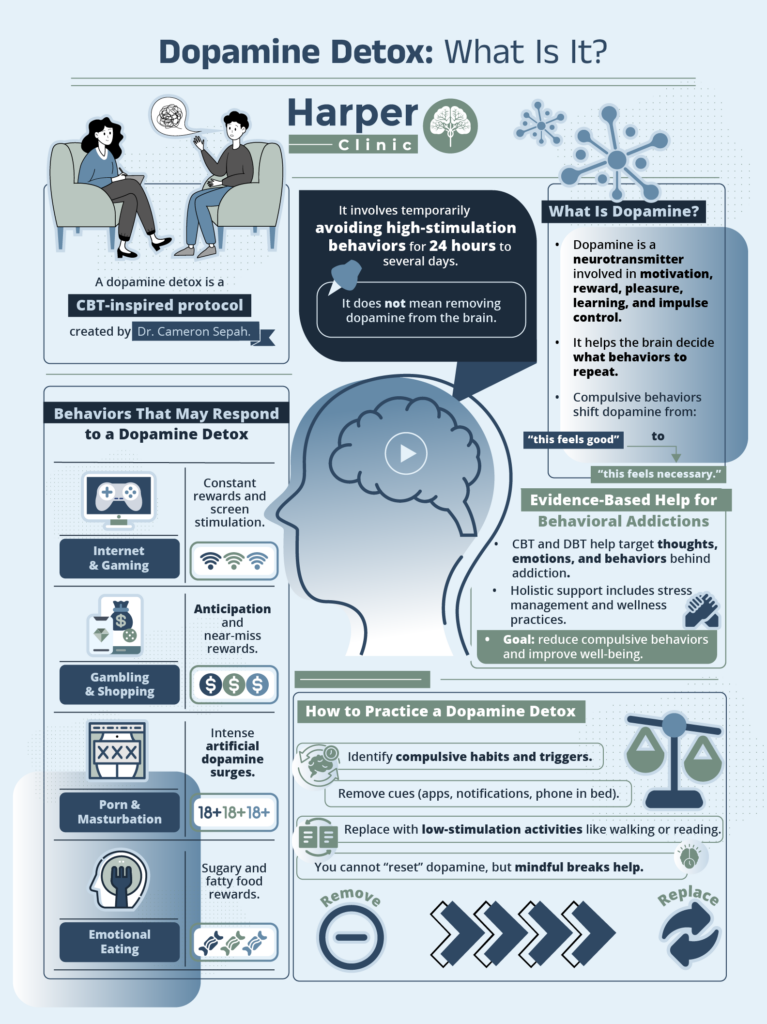
Dr. Cameron Sepah’s “dopamine detox” is a cognitive behavioral therapy (CBT)-inspired protocol to reduce compulsive behaviors by abstaining from specific high-stimulating activities for 24 hours to several days [1].
Despite its name, it doesn’t involve actual fasting from “dopamine”, rather, it involves reducing or being more mindful of behaviors that can impact dopamine in the brain, especially related to compulsive behaviors such as binge eating, porn addiction, and excessive social media use.
People who participate in dopamine detoxes often report increased productivity and social connection, as it targets one or two compulsive habits such as binge eating, online shopping, or porn use through structured avoidance, mindfulness, and low-stimulation tasks such as reading or walking [1].
Reducing these compulsive behaviors often fosters better impulse control and emotional regulation without altering dopamine chemistry directly. Read on to learn more about what a dopamine detox is and
What Is Dopamine?
Dopamine is one of the brain’s neurotransmitters, involved in functions such as motivation, reward, pleasure, learning, and impulse control. Dopamine helps the brain decide what to pursue and do. If a behavior leads to a reward, dopamine strengthens pathways in the midbrain and prefrontal cortex [2].
While “dopamine addiction” isn’t a real addiction itself, compulsive behaviors can disrupt the natural chemical process of dopamine. Over time, cues like notifications, gambling rewards, and times of day (e.g, every morning you bet $20 on a gambling app, so every morning your brain begins to predict or expect this behavior).
Compulsive behaviors shift dopamine levels to make users go from “this feels good” to “this feels necessary,” and reduce the ability to practice self-control.
What Is The Original “Dopamine Detox”?
Dr. Sepah designed the “dopamine detox” based on methods in cognitive behavioral therapy, in which we focus our attention on becoming less dominated by unhealthy or overwhelming stimuli such as notifications, phone calls, and facetimes, especially in our fast-paced techy world.
The idea behind the “detox” was for people to let themselves feel lonely or bored instead of reaching for quick “hits” of dopamine. This is thought to help build self-awareness around how certain behaviors or stimuli distract individuals, and can help regain some control over compulsive behaviors [1].
Dopamine detox is not a literal process of flushing dopamine from the brain, as the body continuously produces this neurotransmitter regardless of external activities. Nor is it a scientifically proven method to reset neurochemical levels, since no evidence supports halting dopamine activity entirely. Instead, it functions as a behavioral abstinence from high-stimulating activities and compulsory triggers [3].
Behavioral Addictions That May Respond to A Dopamine Detox
Several behavioral or process addictions that may respond to Dr. Sepah’s original idea of the dopamine detox include [4]:
Internet and Gaming: Excessive internet use and gaming can trigger rapid dopamine releases through constant rewards like notifications, level-ups, and achievements. This can lead to dependence as the brain craves the quick hits, reducing motivation for less stimulating tasks. A dopamine detox helps by abstaining from screens and reducing screen time.
Gambling and Shopping: Gambling activates dopamine via anticipation of wins, creating a cycle where near-misses reinforce continued play despite losses. Shopping similarly releases dopamine from purchase excitement and item anticipation, promoting compulsive buying, which is especially common nowadays with easy online shopping and the glamorization of “retail therapy”.
Porn and Masturbation: Porn and masturbation deliver intense, artificial dopamine surges that exceed natural levels, desensitizing the brain and diminishing real-world arousal or motivation.
Emotional Eating: Binge eating increases dopamine from sugary and fatty foods, and comfort eating is often linked to overconsumption when under stress. Detoxing requires fasting from trigger foods, and practicing more mindful eating (eating when hungry or at consistent times of the day vs when bored or sad).
Thrill and Novelty Seeking: Constant excitement or adrenaline-seeking floods the brain with dopamine from unpredictable excitement, like extreme sports or new experiences, leading to escalating risks for the same high.
How To Practice A “Dopamine Detox” As Intended
A dopamine detox isn’t cutting out all your favorite foods, fully removing yourself from the digital world, and saying no to any and all things that bring you joy. Think of it rather as a mental rejuvenation and swapping out unhealthy or compulsive behaviors with simpler activities to help reconnect with others or yourself.
Figure out what compels you to engage in a compulsive behavior or bad habit. Is the short-term reward really worth the long-term cost? This helps build awareness around your habits and can encourage you to remove or change cues that trigger these behaviors such as removing doomscrolling apps, blocking gambling websites, and not using your phone in bed at night [5]
You can’t “reset” dopamine levels like a magic switch, but taking strategic breaks and becoming more mindful of certain behaviors helps many people. A few ways to support this include:
- Planned regular breaks from high-dopamine activities such as short-form TikToks or gambling apps.
- Get sunlight every morning.
- Prioritize real-world social time.
- Maintain regular sleep hygiene.
- Intense, aerobic exercise such as running, swimming, or strength training can be helpful.
Evidence-Based Treatment for Behavioral Addictions in Utah
Struggling with addictive tendencies and looking for support to end unhealthy cycles of compulsive behaviors? Whether you are struggling with social media, porn, gambling, binge eating, or another process addiction, we help target the underlying thoughts, feelings, and emotions that drive these compulsive behaviors with therapies such as CBT and DBT.
Our holistic approach at Harper Clinic also integrates stress management and wellness practices to help break destructive habits and improve overall well-being. Patients benefit from yoga sessions, breathwork classes, and Reiki to reduce stress, compulsive behaviors, and cravings.
Reach out to our team today by phone, text, or directly through our booking system to schedule your therapy session.

Sources
[1] Grinspoon, P. 2020. Dopamine fasting: Misunderstanding science spawns a maladaptive fad. Harvard Medical School.
[2] Harvard Medical School. Dopamine: The pathway to pleasure.
[3] National Library of Medicine. 2024.Debunking the Dopamine Detox Trend.
[4] Medical News Today. 2025. What to know about a dopamine detox.
[5] Hu, E. et al. 2022. Too much pleasure can lead to addiction. How to break the cycle and find balance. NPR.